Description
Overview
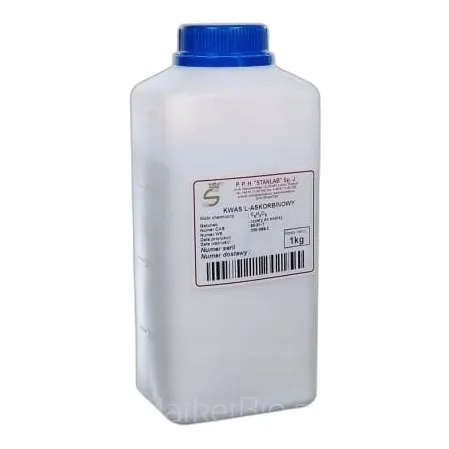
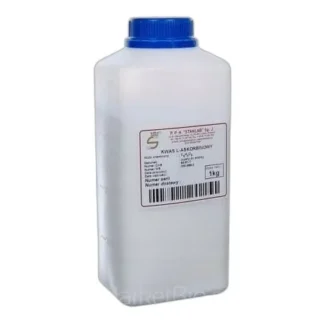
Ascorbic acid (C6H8O6) is a water-soluble organic compound with strong reducing properties. Also known as vitamin C, it is used strictly for technical and laboratory applications. CAS number: 50-81-7. Appears as a white to off-white crystalline powder. Molar mass: 176.12 g/mol. Purity: ≥99%. Free from fillers, binders, or excipients. Hygroscopic—store in airtight containers.
Applications
Used in redox titration experiments to determine oxidizing agent concentrations. Employed in antioxidant capacity assays like FRAP and DPPH. Applied in cell culture media preparation under sterile filtration. Used in enzymatic reaction studies involving dehydrogenases. Incorporated in stability testing of pharmaceutical intermediates. Supports nanoparticle synthesis as a reducing agent. Utilized in food chemistry models to inhibit browning reactions. Applied in environmental analysis for ozone scrubbing calibration.
Specifications
Melting point: 190–192°C (with decomposition). Solubility: 330 g/L in water at 20°C. pH of 5% solution: 2.1–2.6. Assay: 99–100.5%. Loss on drying: ≤0.5%. Residue on ignition: ≤0.1%. Store in a cool, dry place below 25°C. Protect from light and moisture. Compatible with glass and HDPE. Avoid contact with metal ions.
Safety
GHS05: Causes skin and eye irritation. H315, H319. P264, P280, P302+P352, P305+P351+P338. Use gloves and safety goggles. Work in a clean area to avoid contamination. In case of contact, rinse with water. Not intended for human consumption.
FAQ
Is this suitable for HPLC standards?
Yes, high purity allows use as a reference standard in chromatography.
Can it be dissolved in ethanol?
Solubility is low; water or buffer solutions are preferred.
Why does it turn yellow?
Oxidation occurs with air and light exposure—store properly.
How to verify purity?
Use titrimetric or UV-Vis methods at 243 nm.
Can it be autoclaved?
No, heat degrades ascorbic acid—filter sterilize instead.
References
PubChem – Ascorbic Acid
Wikipedia – Ascorbic Acid
ECHA – Ascorbic Acid
SDS – ZarzeccyDrogerieEN
Reviews
There are no reviews yet.